 +91 8981168001
  info@digihyfy.com
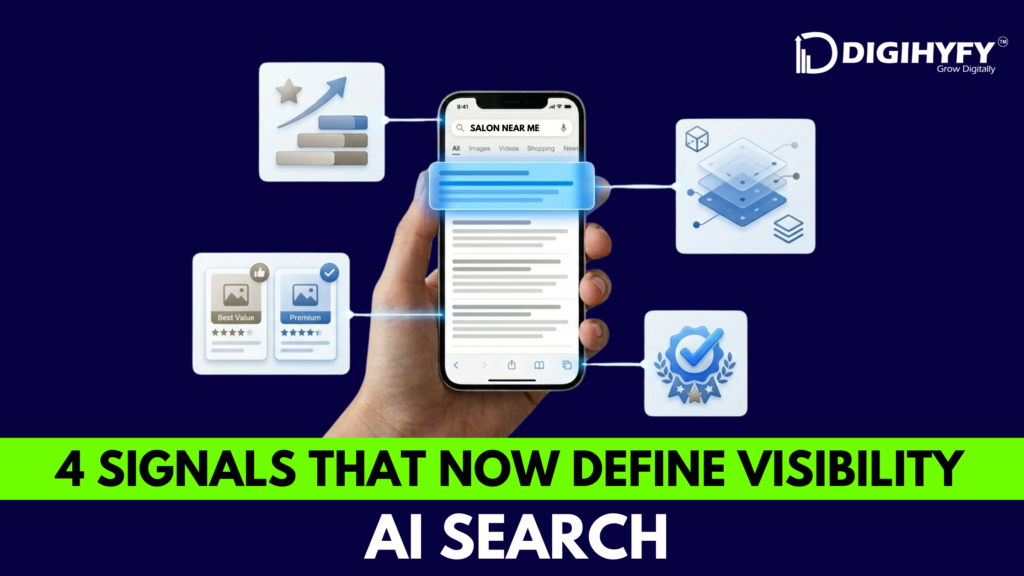
By 2026, optimization won’t revolve around rankings in search engines. In the age of AI-powered search, your aim should be getting mentions in AI-generated responses and search summaries. Be it on AI chat interfaces or search engines offering AI-based answer summaries, your optimization needs are entirely different from what you’ve known so far.
Traditional SEO won’t hurt you, but AI search presents a whole new set of visibility metrics to consider, deciding whether to include, highlight or skip your brand altogether.
Below is a breakdown of the key signals to keep in mind when optimizing for AI search.
- Mention Order:
First Impressions Count Big
Like in traditional searches, the order in which brands get mentioned in AI-generated responses determines visibility and credibility significantly.
AI chat tools and answer summaries don’t just provide answers. They suggest several options, examples, or other references to make their point clear. Naturally, brands mentioned at the top are considered more relevant and authoritative.
How to optimize:
- Focus on topical authority in your niche
- Use clear, structured content that directly answers user queries
- Publish high-quality blogs, FAQs, and guides regularly
- Ensure your brand is frequently referenced across trusted platforms
The more consistently your brand appears in credible sources, the higher the chances it will be mentioned earlier.
- Depth of Explanation: Move Past Superficial Content
The more explanatory and thorough your content is, the more likely it will be selected for use in an AI-generated response.
This does not imply writing lengthy articles without focus—instead, it refers to addressing all aspects of the topic, such as providing examples and use cases.
Reasoning: The goal of AI technology is to provide comprehensive answers to queries. Therefore, they gather information from sources with in-depth explanations.
Tips for optimization:
Create lengthy blog posts (500–1000+ words)
Use headings, bullet points, and other formatting techniques
Provide concrete examples and case studies
Address other questions in the post
Example: Instead of discussing “digital marketing” alone, cover SEO, social media, paid advertising, tools, and methods.
- Authority Signals: Trust is Everything
AI search heavily relies on trust and credibility signals. If your brand is seen as authoritative, it’s more likely to be included in responses.
Authority signals include:
- Backlinks from trusted websites
- Mentions in articles, blogs, and forums
- Strong domain reputation
- Consistent and accurate content
AI systems prioritize sources that are widely recognized and trusted across the web.
How to build authority:
Get featured on reputable blogs and platforms
Create original, valuable content
Maintain consistency in your niche
Encourage reviews, testimonials, and mentions
Think of it this way: AI doesn’t just look at your website—it looks at how the internet talks about you.
4.Comparative Positioning: How You Stack Against Others
AI often presents information in a comparative format, such as:
- “Top 5 agencies”
- “Best tools vs alternatives”
- “X vs Y comparison”
This means your brand isn’t evaluated alone—it’s compared with competitors.
If your content clearly defines your strengths, unique features, and advantages, you’re more likely to be included in these comparisons.
How to optimize:
- Create comparison-based content (e.g., “Agency vs Freelancer”)
- Highlight your unique selling points (USP)
- Use clear positioning statements
- Include pros, cons, and differentiators
For example, instead of just saying “we provide digital marketing services,” explain why your approach is better, faster, or more affordable.
Final Thoughts
AI search is transforming how users discover brands. It’s no longer just about ranking #1 on Google—it’s about being visible inside AI-generated answers.
To succeed, focus on these four signals:
- Mention Order – Be among the first brands listed
- Depth of Explanation – Provide complete, valuable content
- Authority Signals – Build trust across the web
- Comparative Positioning – Stand out against competitors
Brands that adapt to these signals will gain a major advantage in the evolving search landscape. The key is simple: create valuable, trustworthy, and well-structured content that AI systems can confidently use.